






Gallery hours are Tuesday through Friday from noon to 6 pm, Saturday from noon to 5 pm, and by appointment. The Figurehead Gallery is locatedf at 2222 Second Street, Suite 20 and 21 in the Old Theater Mall. For more information call 925-337-1719, email ball@figureheadgallery.com
 |
|
| Erin Kathleen Donohue ekd.com |
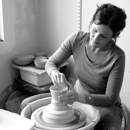
Erin Kathleen Donohue is a self-taught potter and ceramics educator from Livermore, CA. Growing up in a very artistic family she drew, painted and "built" objects from a young age. Her earliest sculptures consisted of tiny houses fashioned from mud in the family garden. (Respecting her young daughter's creations, her mother would always water with care so as not to flood the miniature villages.) Having a need to create was never a question.
While at home with her three young children, Erin began painting, rendering landscapes in acrylics. She continued to pursue painting as her children were entering elementary school. Her discouragement that their school offered no real art program motivated her to develop and generate funding for an art studio open to the school's K-5 student body. The studio instructed in all the basic media, but working in clay was always the students' favorite and, over the eight years she ran the school-based studio, she discovered it had become hers as well.
Since 2001, she has been teaching for the City of Pleasanton, instructing clay enthusiasts of all ages in a range of ceramic skills. Her earliest classes focused on hand building but she quickly became enthused about, then addicted to wheel throwing -- borrowing a wheel on weekends and converting the beautiful painting studio built for her by her husband into a well-loved space for creating pottery. She has taught classes in throwing since 2006. Grateful for the incredible people she has met along the way -- people she has taught as well as people she has learned from, she enjoys the vibrant energy generated in a room full of potters working together at all different skill levels. In such an environment, there is exchange of ideas, of techniques; everyone grows from the experience.
Much of her work is inspired by nature. Her nested bowls will often resemble the petals of a flower as it unfurls into many layers. Likewise the simplicity of a single bowl, both delicate and imperfect in its shape evoke the singularity of a unique organic form.
Erin regards her work in clay as a rich and rewarding journey as there is always something new to learn. She has yet to tire of the endless possibilities that clay and glaze have to offer. To form from a soft piece of wet clay, an object that is both useful and beautiful is a phenomenon that still amazes her. Transferring that experience in others as she teaches as well as having others respond to her work -- engaging with an object's shape and color, texture and weight are each sources of great satisfaction.
 |
|
| Angela Johal angelajohal.com |
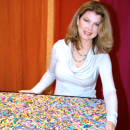
Angela Johal’s work draws from pop culture, consumerism and the sea of images and choices that tend to leave one void. “Embrace them, infuse them with the natural world, re-arrange and decode them, and give them a soul” is her mantra. Ordinary and familiar consumer products are re-created and given a new identity which transforms them into aesthetic works of art.
“I prefer to make art that may suggest the human figure or the natural world rather than create a representation or illusion of something. I like objects that, in a sense, hold some of their own identity. In using neutral recognizable icons, I am free to explore the aesthetic quality of the medium. The pop art movement reacted to the abstract expressionist’s introspective approach. With pop art, the image becomes a structural device in painting, to make art less obscure, but to bring it to the real world again. It celebrated consumerism, where my aim is to take the material, give it a new identity, and use it to make visual poetry with multiple layers of experience, one that is very physical, yet spiritual.At a distance, my work may be interpreted as a non-representational or abstract painting. As you move closer, identifiable consumer objects begin to emerge with few, if any, focal points. I work to create a visual rhythm (I always work with music on) with shape, texture, color and composition which either calms or invigorates then sends you off into an infinite space where the viewer is allowed to react and interpret the piece, like poetry does.
 |
|
| David Johnson |
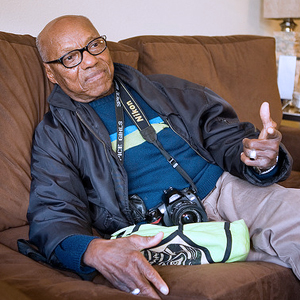
When David Johnson returned to Jacksonville, Florida in 1946 from the U.S. Navy, he was certain of one thing, and that was that he wanted to become a photographer. What was uncertain was where he would find the opportunity to study photography. One day at his old job as a sheet metal worker, he happened to read an article in Popular Photography that Ansel Adams was starting photography classes at the CSFA. Johnson wrote to Mr. Adams seeking a spot in the first class. He mentioned that he was a Negro. Johnson received a telegram back from Adams saying the class was filled, and that it did not matter that he was a Negro, but that his name would be placed on the list in the event someone cancelled. Within a week he got another message saying there was a place in the class.
Johnson arrived in San Francisco in 1946 shortly after his 19th birthday and was met by Minor White at the Ferry Building. They took the streetcar together to the house of Ansel Adams overlooking the entrance of the San Francisco Bay. Johnson stayed there until he found a place to live in the Fillmore District–the black section of the city and a place that would shape his future.
Johnson became the first African American student in the photography class at the CSFA–he’d never sat in a class with white students. He didn’t realize then that the cultural and racial life of his past would drive much of his photographic career. All he needed was a tool to express what was inside. As one of his mentors, Life Magazine photographer Gordon Parks, said, “It’s a choice of weapons.” In many ways, the camera has changed the world through non-verbal communication.
Johnson chose to focus his work on the socially relevant issues facing urban communities, especially African Americans. After WWII, the Japanese were returning to the Western Addition, commonly referred to as The Fillmore District. The Blacks found themselves in the situation of not being able to legally locate outside the Fillmore District or Hunter’s Point District (where the black population located during the years when they came to the Bay Area from the southern States to work in the war-related industries). Johnson has photographed San Francisco social groups, politicians, musicians and other artists, visiting African dignitaries, and student and religious leaders. During the Civil Rights Movement of the 1950s and 1960s, he captured historic images of demonstrations and Civil Rights leaders, local and national. His photos have been on the cover of Black Scholar magazine and featured predominantly in the book Harlem of the West by Elizabeth Pepin and Lewis Watts, which documents African-American life and culture in San Francisco.
Achievements of Johnson’s career include a Public Service Award from the University of California for work in the Haight Ashbury Community and Affirmative Action for Women and Minorities; photo retrospectives Lifestyles of African Americans in San Francisco in the 40’s, 50’s; 60’s; To Tell a Story…through Griot Eyes; A Black Man in America; PBS’ KQED documentary The Fillmore; KQED Television’s Common Ground: Reflections of Rabbit in the Moon and The Eye of the Lens: Bay Area Black Photographers’ Exhibit. Johnson was a pioneer photographer in the community. His name is etched in concrete at the Fillmore Plaza, Fillmore and O’Farrell Streets. It states: David Johnson, photographer and photojournalist. He studied with Ansel Adams.
 |
|
| Suzanne Lovejoy Johnson pigmentz.com |
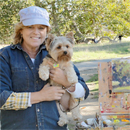
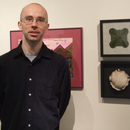
Suzanne has a Bachelor of Fine Art from The California College of Art in Oakland, and has experience in mediums from graphic design and furniture to textiles. Running a faux finish and mural business for 16 years in the San Francisco Bay Area, she has now focused her creative energy to painting on canvas. Suzanne continues to study with many masters in the fine arts.
"I'm continually astounded by the magic transformation that occurs when a blank canvas, paints and some brushes, unite and become a picture which moves us and has soul. After working in mediums that required much technical preparation, I fell in love with the spontaneity of paint. Beginning with a single stroke of my brush, I get immediate gratification. Motivated by such spontaneity, I paint from real life as it is passing before our eyes. Drawing from live models, actual still lifes, and plein air painting in the great outdoors, I'm constantly moved by our everchanging landscape and marvel at the universal language of emotion through art."
 |
|
| Goran Konjevod organicorigami.com |
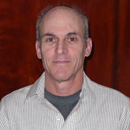
My profession is mathematics and theoretical computer science. I have studied at the University of Zagreb (B.S. 1995) and Carnegie Mellon University (M.S. 1998, Ph.D. 2000). I worked as a professor of computer science at Arizona State University from 2000 until 2010. Since 2010, I've worked at the Lawrence Livermore National Laboratory.
Origami has been a hobby of mine for a long time, but I mostly folded from others' instructions. Not until 2005 did I start seriously exploring the possibility of original work in origami. Most of my pieces so far are abstract shapes naturally formed by the tension of the paper when multiple layers of paper are arranged according to regular or irregular patterns. In that sense, they could almost be said to be discovered, rather than invented or designed. In particular, the pieces shown in my pleat tessellation gallery pages have been developed from a single urform discovered by Paul Jackson. The experience of folding these pieces has helped me begin to understand how particular fold sequences interact and in a few cases I have been able to visualize the final shape before starting to fold.
I try to restrict myself to working with single uncut sheets of paper or other foldable material (such as copper), and for the most part use very simple “pureland” folds. Normally, this last restriction would imply that the resulting forms are flat. However, a real sheet of paper is always three-dimensional—even when unfolded—and its thickness brings about a much more obvious three-dimensionality when multiple layers are present.
 |
|
| Josh Latkin |
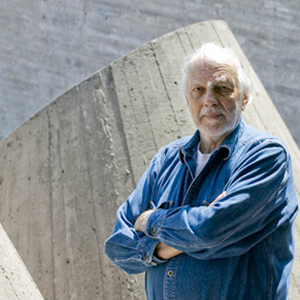
Materials, both natural and manmade ones, and their uses, have always interested me. I love building things, sometimes more to work with the materials and see how their natural properties are used, than the need for a structure. This is also one of the main reasons for my gardening and the growing trees in my orchard, is to create and live with the structures that are functional and come out of this work. The structure of a tree that was started from a single bud, the neat box of apples that nature engineered, or the way rows in the garden must be built to be successful in ways that work with nature instead of fighting against it.
I find it fascinating the way engineering progresses in both structures made by people and natural ones and how people are more and more able to understand natural structures and processes, work with them and put them to use.
My father has always been a great resource, helping me learn the properties of materials and also how to test and research them, and now my son, who is an Aeronautical Engineer, helps me with the mathematics required to accurately assemble some of the ceramic pieces I build. My current pieces are constructed with slabs of clay. Part of my ability to construct these pieces came from finding a way to have gravity and other natural forces work for me in the assembly and finishing of these pieces.
Much of the inspiration for my current ceramic work comes from food service and storage. My wife, daughter, and myself, have always worked hard together to produce, and have fun with food, both for the taste and visual aspects. Some of my works are just my ideas of, for example, what a serving dish could be, or how a pastry might be presented. Some are inspired by classic storage and serving vessels, others are inspired by some of the earliest food storage pots made in Central America, or a granary built in North America thousands of years ago, and how it was constructed to keep rodents out.
Some of the pieces are just wild inspiration, although they may or may not have some use, they can sometimes just be art for the heck of it. After all, the limits of art are like the limits of the universe, not a boundary out there somewhere, but only restricted by the limits of a finite mind.
 |
|
| Gerald Ratto geraldratto.com |
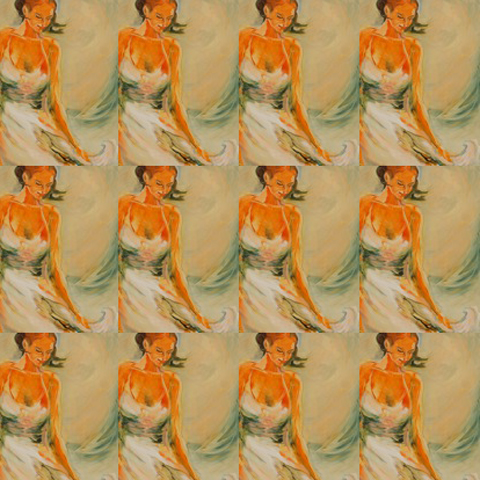
“People sometimes ask me where I want to go to take pictures. I never have an answer. I say I’ll know when I get there. I think this is the only way to stay fresh. All of us have only so many creative ideas. If you have a preconceived notion of what you want to photograph, your work all starts to look alike. I photograph what’s in front of me. Then people, buildings, objects and landscapes tell their own stories.” It is this philosophy that has kept Gerald Ratto’s work fresh and exciting for more than five decades…and counting.
Born in 1933, Ratto began photographing with his mother’s inexpensive box camera at age 12. He enrolled at University of California, Berkeley with plans to become an architect but instead switched to photography; as he felt that his fascination with light and form might be best expressed behind the camera.
He transferred to the California School of Fine Arts [now San Francisco Art Institute] famed photography program founded by Ansel Adams in 1945. There he received invaluable creative and professional insights from the programs many instructors, including department head Minor White, as well as other photographic luminaries Imogen Cunningham, Dorothea Lange, and Edward Weston.
His distinguished career in fine art and commercial photography began while he was still a student. Before graduating, his work was exhibited alongside his instructors in the landmark juried “Perceptions” show at the San Francisco Museum of Art in 1952.
Upon graduating from CSFA in 1953, Ratto combined an interest in architecture with his skills as a photographer to specialize in architectural photography. Among his clients were such noted firms and designers as Buckminster Fuller, I.M. Pei, Gensler, Skidmore, Owings & Merrill. His architecture work has been published in major architectural, interior and landscape design magazines and books.
While architectural photography has provided his livelihood, his fine art portfolios perhaps best express Ratto’s love of the photographic medium. “People relate to Gerald’s work because it is arresting as well as aesthetically pleasing and beautiful,” said Suzy R. Locke, President of Suzy R. Locke & Associates, art consultant to corporations and private individuals. “His approach eliminates the clichés.”
Not one to ever take for granted his past accomplishments or successes, at age 79, Ratto still actively photographs. His most recent awards include the coveted juried International Black & White Spider Awards in 2010 and 2011 for categories of Photojournalism, Advertising, and People and 2009 International Photography Awards – Architectural Buildings - Honorable Mention. In 2008, B&W Magazine featured Ratto’s “Children of the Fillmore” portfolio with a Spotlight Award and article highlighting his life’s work and contributions to fine art photography; “With a career of more than five decades as a commercial and fine art photographer, Gerald Ratto could rightly be called one of the true legends of the San Francisco Bay-Area photography scene.” Presently, his December 1958 photograph and cover design for Arts & Architecture magazine is being featured at LACMA [Los Angeles County Museum of Art] “ California Design, 1930-1965: Living in a Modern Way.”
 |
|
| Linda Ryan lindaryanfineart.com |
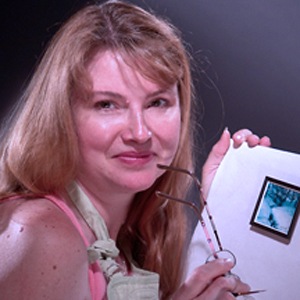
Ryan uses abstraction to explore motion and energy, and to create a sense of connection with that power. Her media, acrylic, demands that she work quickly during each session, and the effect is usually either flowing or layered and built over time.
Her abstract figuratives begin often with a photograph or model, but sometimes simply from a mental image. The photograph is usually discarded early on as the figure takes its own shape and energy. Ryan’s early work as a litigation paralegal often inserts itself with references to striated musculature or the smoothness of tendon or bone. In her large dancer paintings, approached over a long period of time, the sense of movement is even more strongly defined, with a layered approach that can take a year to create.
Ryan is an award-winning painter whose works are in collections in several states and in Europe. She began studying painting in 1999 with Bill Paskewitz at Las Positas College in Livermore, and in 2003 was awarded a $10,000 Robert Butler grant to further her work. She has painted many commissions from 6’ wide abstractions of horses running, gel abstractions, dancer paintings and abstract portraits.
In 2001, Ryan became active as an arts advocate in the Tri-Valley area, working with friends and colleagues to create multiple exhibition opportunities for artists, manage art exhibitions and spaces to exhibit and view art, and work to expand art offerings downtown. Ryan founded and has run ArtWalk since 2002. She manages the Bothwell Arts Center, runs the visual arts exhibition program at the Bankhead Theater, ran a small part-time gallery called Ryan Fine Art where multiple art exhibitions have been held, and has curated, coordinated, hung and run themed, solo and group exhibitions in the area such as at the Wild Vine, as well as a small exhibition program for emerging artists at Panama Red Coffee Shop. She is a past Livermore Commissioner for the Arts.
 |
|
| Barbara Stanton barbarastanton.com |
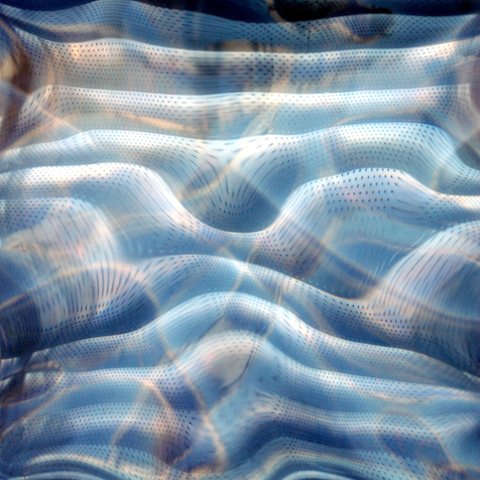
Barbara Stanton is a native Californian and has lived in the San Francisco Bay Area all her life. Specializing in miniature oil paintings and portraits (miniature and full size) her charming landscapes, still lifes and portraits are done in a very traditional, realist style. Her superb use of color and light make each piece glow. The precisely detailed compositions, some no larger than a postage stamp, call out to the viewer to step nearer and explore them more closely, to feel the moment.
Barbara's work has found it's way into collections around the world. Miniature collectors are her biggest fans because she paints in the popular dollhouse scale 1/12 (one inch equals a foot) and they fit just right in their fine miniature collections.
Painting for more than thirty years now, Barbara has mastered her technique and continues to seek new challenges. She is an IGMA Fellow (International Guild of Miniature Artisans). She is also an art instructor and is available for demonstrations and workshops. She has taught twice at the annual IGMA Guild School in Castine, Maine (2001 & 2003). Barbara is very active in her local communtiy and runs a figure drawing workshop every Fri. as well a being the Gallery Director for the Livermore Art Association Gallery.
 |
|
| Deborah Mills Thackrey dmt-art.com |
Photographer Deborah Mills Thackrey was born in the Texas Panhandle town of Amarillo in 1953. Numerous childhood trips along old Route 66 thru the Southwest instilled in her a wanderlust and love of the passing scenery including dramatic sunsets, old motel signs, roadside attractions like snake shows, desert landscapes, the Navajo indian reservation, Burma Shave signs, and National Parks like the Petrified Forest, Painted Desert, and the Grand Canyon.
Iconic images from the Vietnam War and 60's cultural protests inspired in her a love of the ability of the photojournalist to capture a meaningful moment in time. She joined her junior high yearbook staff in order to get her hands on her first camera. As the only photographer in high school journalism class she was left alone in the darkroom to develop her skills. This put her on the path of being self-taught and independent most of her career.
Thackrey migrated to California at the age of 20, unable to get into regular art classes at San Francisco State she began to study theatrical design. The influence of her makeup and costume design is visible in her projected nudes series. In the next phase of her life she began a career as a graphic designer which gave her an opportunity to work art directing top commercial photographers at major corporations such as Apple.
She also spent 30 years studying modern dance with a student of seminal modern dance pioneer Lester Horton. Recent projects include a third collaboration with dancer Ishika Seth at the Theatre Yugen in San Francisco projecting her textural photographs and videos onto dancers who improvised to the content of the images.
When her husband Tom returned to photography about a decade ago, she picked up a camera again as well, after more than a 20 year absence. They spent time in the esteemed photographic community of Carmel beginning friendships with photographers such as Edward Weston's grandson Kim. Within a couple of years of serious immersion in photography, Thackrey was offered her first solo exhibit in Monterey at the Stefani Esta gallery in 2002. She began to regularly win prizes in juried shows in Los Gatos and Santa Clara with curators such as Philip Linhares from the Oakland Museum and the Triton's George Rivera. Solo exhibits in Los Angeles and Palo Alto followed, as well as being included in more than 50 group shows ranging from the Texas Photographic Society, to galleries in San Francisco, San Jose, Los Angeles, and Monterey.
Thackrey has recently become an activist for artists in the South Bay as one of the founders of the Silicon Valley Artists' Collaborative with the goal of helping to create more recognition and opportunities for local artists. She has been trying her hand as a curator and gallerist founding the Axis Art Gallery in downtown San Jose's Axis high rise.
Thackrey won the coveted 2009 Arts Council Silicon Valley Fellowship Grant for Photography which included a show in the rotunda of Santa Clara's Triton Museum. Her work is in private collections from New York to LA and Marin County and in corporate collections such as Adobe.
 |
|
| Tom Thackrey creative-light.com |
I have been interested in photography since I was a teenager. At various times I have done weddings, product photography, portraits, events, and sports teams. I make my living as a computer programmer.
Photography is an interesting combination of art and science. I get a lot of technical help from several excellent photographers. The best advice on art came from a well known photographer who stabbed me in the chest with her finger and said "Photograph from your heart, then just swish it around a bit in the chemicals. Don't worry about the technical." It's still too easy for me to become mired in the process. A technically perfect photo without substance is a perfect nothing. My goal is to make photographs that speak to me. It would be nice if they spoke to someone else, too.
Photography is all about light. For many years I did traditional photography-- adjust the lights, adjust the model, adjust the backdrop, adjust the camera, release the shutter. One day a friend suggested I try some more exciting lighting. It came to me that I could really control the light if I applied it like a painter applies paint. The results surprised me in many ways. One surprise was how it changed the way I think about photographs. No longer am I worried about the distractions in the background, or foreground for that matter, I simply don't light what I don't want in the picture. Another surprise is the number of variables involved. The light source, distance from the camera to the model, distance from the light source to the model, speed of movement, direction of movement, etc. all impact the results. It's fascinating to take an idea for a